Psychological and performance coaching in esports is still far less widespread than in traditional sports. In traditional sports, teams provide players with extensive resources with more specialized roles, from nutritionists to strength and conditioning coaches, physiotherapists, and more.
However, this is no longer new in the esports industry. It was popularized by Astralis during its dynasty era and has since been adopted by many top, championship-contending clubs to alleviate performance pressure and build a system capable of consistently delivering championships.
But once that system is established and the team is in the midst of an era-defining winning run, how should the performance manager adapt? When a team has already won everything and looks invincible, what work is needed to keep the team focused?
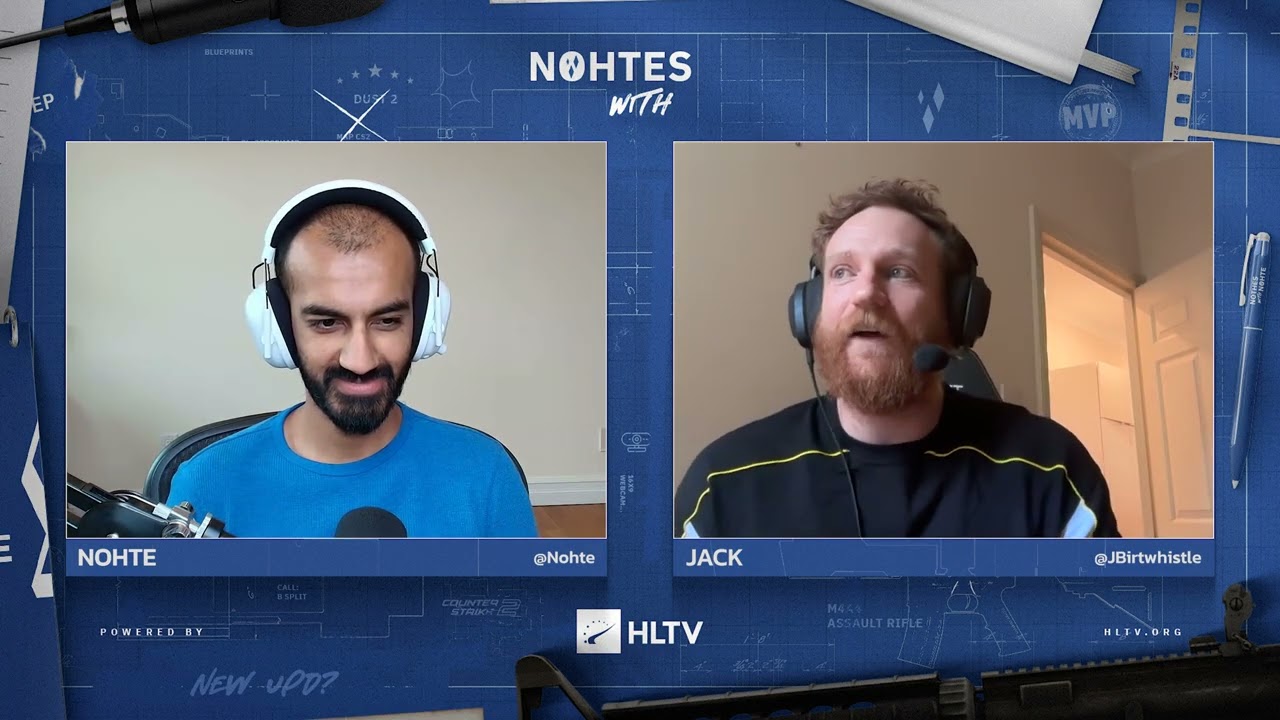
This is exactly the question Nohte put to Vitality performance manager Jack Birtwhistle. In this interview lasting over an hour, the team is striving at the EWC
Back on the winning track at the Esports World Cup — after exiting in the quarterfinals of the IEM Cologne Major and being eliminated early in the online stage of BLAST Bounty S2.
This Australian brings five years of professional rugby experience, but had almost no esports experience when he joined the French club in November 2023. At the time, Vitality had just won the BLAST.tv Paris Major, and shortly after his arrival, the team closed out the year with titles at the BLAST Fall Final and the World Final.
But things quickly went wrong, or in Birtwhistle's words, "we may have rushed a bit, putting results before process." Vitality still consistently reached the playoffs in every tournament, even winning IEM Cologne, but the team was unable to reconcile the differences in vision between itself and Spinx.
"Once it gets to the point where an athlete no longer wants to stay on the team, I think my role in the area of mental performance is... I like to use the term 'Sherpa guide': I can point out the way up the mountain for you and try to help carry some of the baggage, but I can't take every step for you," Birtwhistle said when asked about the work he did to ease the problems during that period.
"So once Lotan (Spinx) decided that this team was no longer the right fit for him, there was really nothing I could do to win him back; we could only try our best to patch things up during the time we were still together. Honestly, I don't know what we could have done differently during that period, because it's hard to explain, but it wasn't exactly a hostile situation. We wanted to keep things as harmonious as possible, but if we had dug deeper into those issues, it could have created an unsafe environment for everyone. Well, 'unsafe' might be too strong a word, but it would have made it difficult for everyone to continue coexisting.
"So everyone was trying hard, including Lotan, to barely hold the team together with 'patches' and 'tape' during that time. But honestly, by the time we got to the middle of the second half of the year, I think everyone knew change was coming, and that gave everyone a sense of calm, that 'okay, there will be an adjustment, and everyone will be better off for it.'"
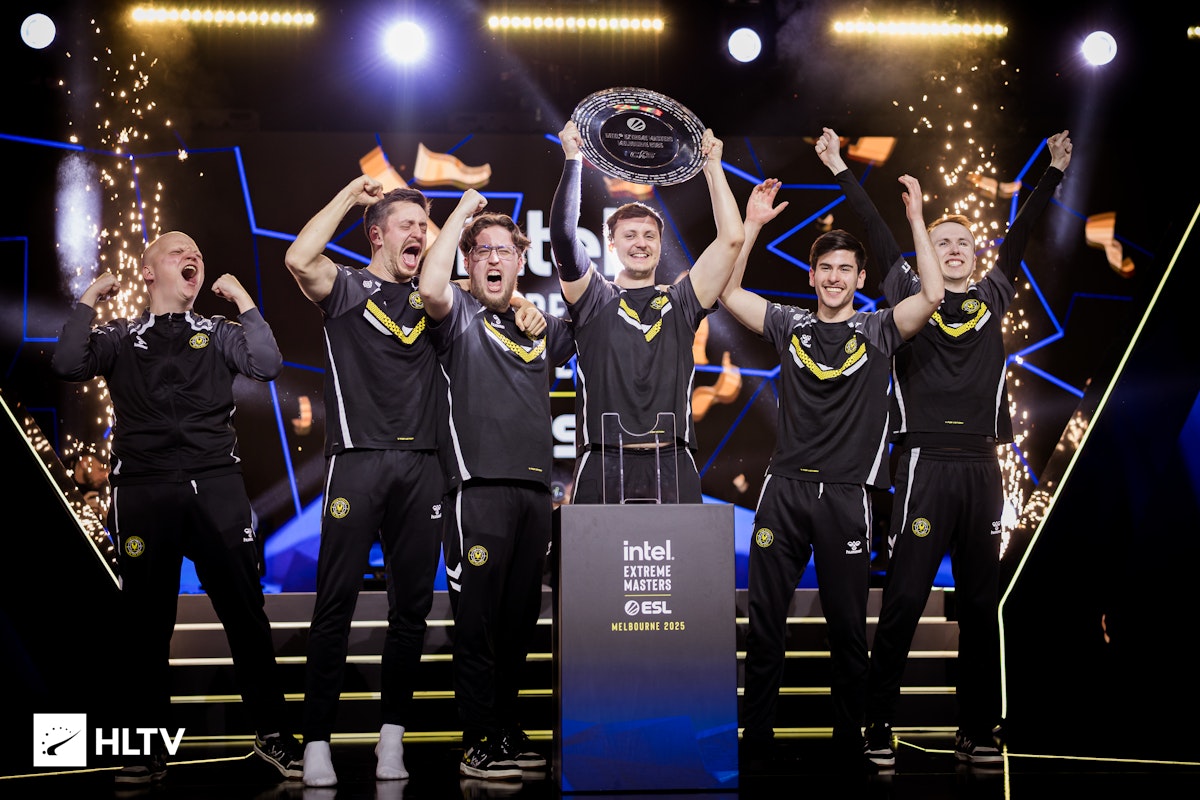
When ropz joined in January 2025, everything changed. The transfer sparked one of the most dominant seasons in Counter-Strike history, as Vitality achieved a 30-match winning streak and won seven consecutive tournaments, including the BLAST.tv Austin Major.
Birtwhistle emphasized that 99% of success comes from the athletes, and what he does is make that 1% difference, helping them bring out the best in themselves. It was during that journey that he introduced "theming", a concept he borrowed from his rugby career.
"Basically, it's a theme that will define you to some extent this season," he said. "We used Tom Brady's documentary 'The Man in the Arena.' We want to be the men in the arena.
"Looking back on it now, it's actually quite interesting, because before 2025, there was a slight trend where we struggled a bit in the knockout stage. For example, we would dominate the group stage and perform really well, and then start to struggle once we got to the knockout stage. So we wanted to be the man in the arena, there's a great quote there. I can't quote it word for word, but the meaning of 'The Man in the Arena' is that critics and commentators will always have something to say, but they've never experienced what it's like to be in the arena, and you should never accept criticism or judgment from people who have no understanding of that experience at all."
When asked to explain this documentary and what being "the man in the arena" means to the team, he continued: "One of the reasons I chose it is because everyone looks at them and says they are the greatest team in history, one of the greatest sports dynasties in any sport. But they also had years when they made the playoffs and lost, years when he was injured and the team missed the playoffs. I don't remember the exact years, the first championship was maybe in 2001 or 2002, and his last championship with the Patriots was probably around 2018. In the end, no one judges them by their failures; they are judged by how many times they succeeded.
"Part of the reason I chose it is that CS is like that too: you can condense all of those seasons into one CS season, because you'll win some titles and lose some titles. So I don't want us to define success as winning everything we enter. In the first few episodes, Tom Brady talked a lot about the process, and he has a line that goes, 'My goal is to be a Super Bowl champion on the first Monday of preseason.' Anyone can be a Super Bowl champion during Super Bowl week — they put in all the time, are all-in, motivated, do all the homework. But can you bring that same level of discipline and commitment on the first Monday of preseason as you do on the Monday before the Super Bowl kicks off?"
It is this, combined with "periodization" — when the team wants to hit peak form — that Vitality used to define their season. Birtwhistle went on to explain how this philosophy was broken down and implemented across every event the team competed in, including that "poetic" Intel Grand Slam victory at Rod Laver Arena — home of the tennis Australian Open, where Vitality felt it was "meant to be" to win the gold bars in the same arena where Federer, Nadal and Djokovic had won Grand Slams.
Another concept introduced by Birtwhistle is a simple Google Form with a traffic light system. He said he likes to "keep things simple", as detailed feedback can be difficult for young people and gamers.
"We regularly review our values, I'll send the lads a form to fill in where they can score how we're doing across all the different categories," he said. "We might use a traffic light system: green, yellow, red. If anything is red, it needs to be addressed immediately; if anything is yellow, we need to pay more attention to it; if it's green, let it continue. But we'll keep coming back to these points and keep that conversation open."
"We can have players rate how they feel about different maps and different sides, just to capture everyone's mindset before heading into a major tournament, or at the start of a season, mid-season, or before a Major. We hold these regular check-ins.
"In a sense it's flexible: we've held 'values dinners' where the whole team sits down and talks over a meal. Sometimes it's a bit more structured — if an obvious issue comes up, we might have a more structured conversation, like 'Okay, guys, we're struggling a bit with adaptability,' or 'We're struggling a bit with putting the team first at the moment.'"
All that work ultimately paid off, culminating in lifting the trophy at the Austin Major, but the Vitality that returned to the servers after the player break was no longer the same team. A semifinal loss to MOUZ at IEM Cologne ended their 37-series winning streak to start the season, while a defeat to The MongolZ at the Esports World Cup showed that the chemistry from the first half of the year was gone.
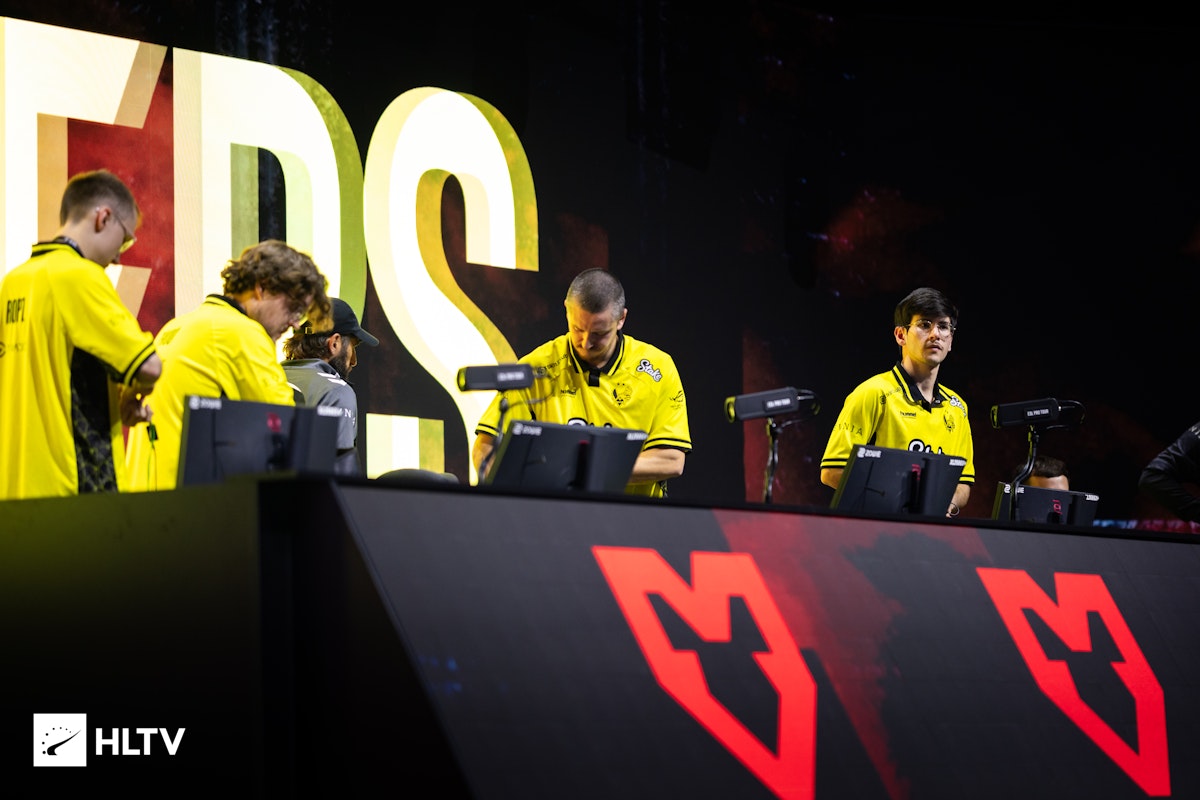
"Honestly, for me, my biggest challenge during that period was that we as a team lacked enough humility," Birtwhistle said. "When our standard basically became perfection — we were on a 37-map winning streak, and then won every single event — our expectation became that we were perfect at CS, we don't lose maps, we rarely lose maps, we don't lose BO3s.
"And then suddenly this happened, with frustration growing in everyone's minds, and it was really hard for us to navigate that humility, to look more humbly at where we stood at that moment — a team that was not invincible. We had been invincible, but we weren't anymore, so how do we face that? But it's really hard to... I always say, in rugby I can work with the best kicker in the world, but I can't kick the ball through the posts for him, he has to actually take that kick himself. So no amount of mental performance work can make up for poor individual technique, can make up for poor... It's not that our tactical system was terrible, but we were trying to solve the problem on all fronts at the same time, and that became very difficult, because Dan (apEX) and Rémy (XTQZZZ) needed time, and MaT needed time too, to dive deep into the game."
Vitality got the time they needed and then went on a title run at EPL S22, but their hunt for more trophies was halted by FURIA — who seized a fleeting opportunity to claim several titles of their own. But that didn't shake Vitality heading into the StarLadder Budapest Major, with Birtwhistle saying the team was "just as confident as in Austin," and that confidence was on full display as they stormed to the title to become back-to-back Major champions.
And somehow, after that unprecedented run in the first half of 2025, they almost repeated it all over again in 2026. Five titles in a row, including winning the Intel Grand Slam again at IEM Rio, immediately followed by a BLAST Rivals S1 title with no practice, made the team look invincible. But that extended break from practice eventually came back to bite them, as they lost to NAVI at IEM Atlanta to end the streak, and their attempt to replicate the Budapest Major comeback went awry at the Cologne Major.
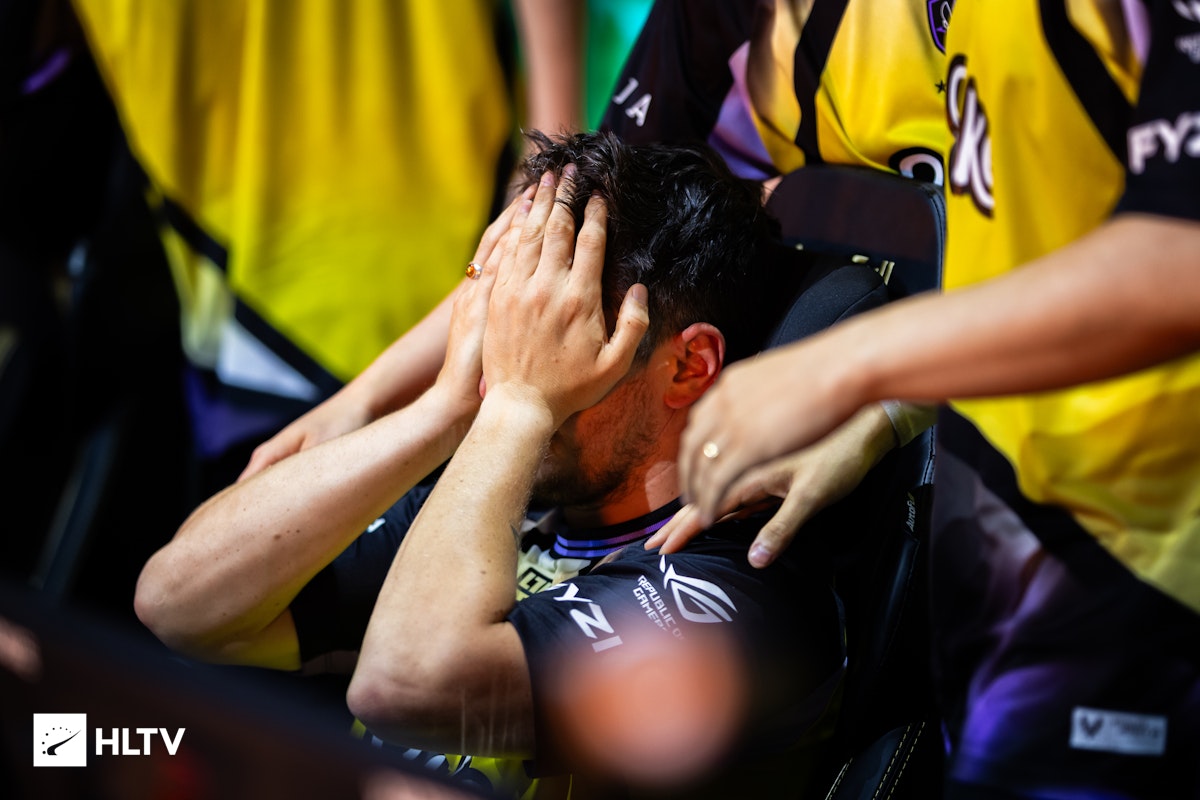
"There was a consensus at the time that we weren't at our best individually going into the Major, and we may have missed an opportunity to push harder on the value of 'doing your job': we gave this break, but we were actually expecting something in return," Birtwhistle said.
"This does not mean that we can come back from our break and immediately return to business as usual, because we had a break after Dallas, and a break after Atlanta, then went into a training block and then training camp. We probably should have been more explicit with the players about the expectation in this trade-off, which is that you have that time off, but 'doing your job' means that when we come back to train, you need to have all of your stuff down, you at least need to be prepared to get back to your best individual form.
"It's not to say the players weren't working hard — they absolutely were, but from the staff's perspective, this is something we could have been much clearer about and perhaps didn't capture. We absolutely trusted the players to find their own way back to their best, and they had a good plan in place, XTQZZZ and MaT put together a good plan. So this is more about being very, very clear and stating it outright: if we need to do more, then we have to do more. We didn't push the players harder on that point, but that doesn't mean that if we had pushed, we would have won that Major."
At the start of the season, a BLAST Bounty title still eluded Vitality, but this time they were eliminated in the online group stage, missing out on the LAN finals entirely. Birtwhistle said the staff took time during the break to reflect on their approach and whether they had placed too much trust in the same system that had brought them so much success. Although they did not fall for the misguided temptation to "tear everything down and start over," they were testing a new structure ahead of the Esports World Cup.
"One thing I learned from rugby is what they used to say, 'How do you manage those grey areas?' If you look at your Google Calendar, all your training, theory sessions, coach meetings, everything in the calendar is in colour, and grey is the time when nothing is scheduled," Birtwhistle said when talking about their new plan.
"So, as an individual, as a player, how do you manage that time? What do you do before training? What do you do after training? As I said before, we gave the players a lot of freedom. This time we put more on the calendar, we said, 'We're going to hold you more accountable.' If we say 'do your job' is one of our values, then we're going to hold you accountable for it. And we're not only going to hold you accountable, we're going to schedule time in the calendar, we're going to see with our own eyes that you're doing the work you're supposed to do, instead of just trusting you to do it. They responded really well to that yesterday. When we get back together tonight we'll see if we still have that same energy, but I don't want to give away too much of XTQ and MaT's secret sauce.
"But that's the big change, and I believe every coach, every team understands this: how much time do you schedule and commit as fixed, non-negotiable time for the team, and how much do you let go? [...] Coaches have always been coaching players, and players have always been putting in the effort, right? It's not about [questioning] their effort, but it brings better connection, because we're doing this together; better alignment, because we clearly understand what each other is doing; and more shared problems, and more time spent together on the server."